


Beyond Grades: What Really Makes an Ivy League Applicant Stand Out?
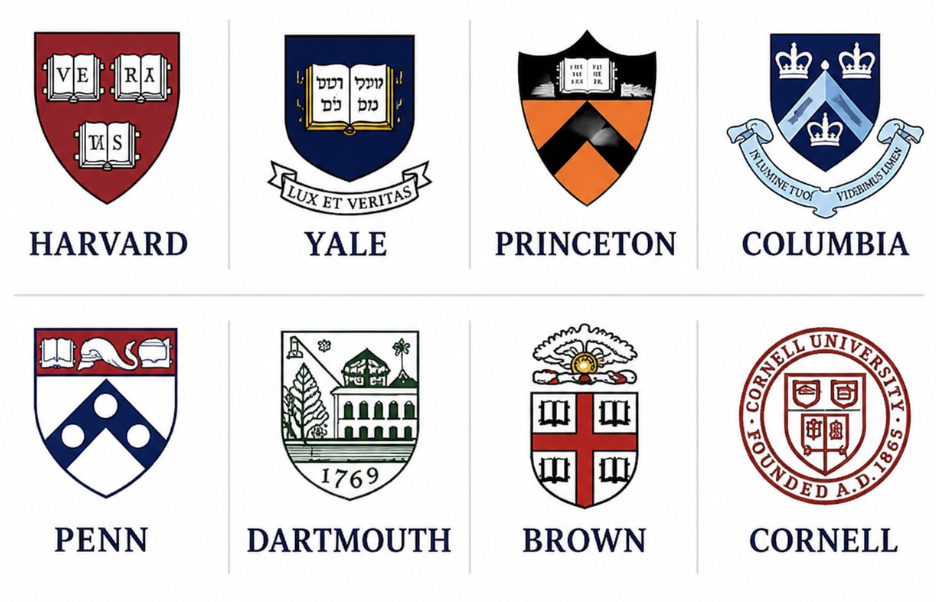
Every year, thousands of exceptional students from around the world apply to Ivy League universities such as Harvard, Cornell and Columbia. Many of these applicants achieve outstanding grades, near-perfect standardised test scores and impressive academic records. Yet, only a small percentage receive an offer of admission.
So, what separates successful applicants from everyone else?
The answer often lies beyond the classroom.
Admissions officers are not simply looking for students who excel academically. They want individuals who demonstrate genuine curiosity, leadership, creativity and the ability to make a meaningful impact. In other words, your extracurricular profile can become the defining factor that transforms a strong application into a compelling one.
Why Extracurricular Activities Matter
The reality is that exceptional academic performance is no longer enough to distinguish yourself in an increasingly competitive admissions landscape.
Many Ivy League applicants have straight A grades, excellent examination scores and strong teacher recommendations. What truly differentiates one candidate from another is how they choose to spend their time outside school.
Universities want to understand:
- What genuinely interests you?
- How have you pursued those interests?
- Have you created something meaningful?
- Have you demonstrated leadership?
- What impact have you made on others?
Your extracurricular activities tell the story that your academic transcript cannot.
The Three Types of Extracurricular Activities Ivy League Universities Value Most
Although every successful applicant has a unique profile, most outstanding applications contain a combination of three broad categories of extracurricular involvement.
1. Academic Excellence Beyond the Classroom
Top universities value students who continue learning outside their school curriculum simply because they enjoy exploring new ideas.
Examples include:
- Conducting independent research
- Publishing academic papers
- Participating in Science Olympiads
- Competing in hackathons
- Completing university-level research projects
- Attending advanced academic programmes
For example, one successful applicant completed independent research during secondary school and published the findings in an academic journal. This demonstrated intellectual maturity and significantly strengthened the student’s university application.
Rather than merely achieving excellent examination results, the student proved an ability to contribute to academic knowledge.
2. Leadership and Initiative
Leadership is another characteristic that admissions officers consistently value.
However, leadership is not simply about holding an impressive title.
It is about identifying opportunities, solving problems and inspiring others to contribute towards a shared goal.
Strong examples include:
- Serving as Student Council President
- Founding a school club
- Creating a start-up
- Leading community service initiatives
- Organising national competitions
- Building educational programmes for younger students
Ivy League universities are looking for students who create opportunities rather than waiting for them.
They want builders, organisers and innovators.
3. Passion Projects
Perhaps the most underestimated aspect of a successful Ivy League application is the personal passion project.
These projects often become the centrepiece of an application because they reveal authentic motivation rather than participation for the sake of a university application.
Examples include:
- Designing a healthcare device
- Developing a mobile application
- Launching a YouTube educational channel
- Writing a research-based blog
- Starting a non-profit organisation
- Building AI tools
- Creating environmental initiatives
One admitted student designed a hand-tremor suppression device aimed at improving the quality of life for patients with neurological disorders. The project demonstrated innovation, technical ability and real-world problem solving—qualities that admissions committees highly value.
Real Ivy League Student Profiles
Although every applicant follows a different journey, several common patterns emerge from successful admissions profiles.
Profile One: Research and Innovation
Students in this category typically engage in research long before they apply to university.
Many collaborate with professors, undertake independent investigations or publish their work.
Alongside research, they often develop technical projects that demonstrate practical application of their knowledge.
The combination of intellectual curiosity and original work makes these applications particularly compelling.
Profile Two: Advanced Summer Programmes
Many successful applicants participate in prestigious summer schools or research programmes hosted by leading institutions.
These programmes frequently involve:
- Scientific research
- Engineering projects
- Artificial Intelligence
- Robotics
- Entrepreneurship
For example, some students complete advanced programmes offered by institutions such as MIT or Yale, working on real-world engineering challenges or autonomous systems.
Participation in these programmes signals academic rigour, commitment and the willingness to challenge oneself beyond the school curriculum.
Profile Three: Entrepreneurship and Real-World Impact
Increasingly, Ivy League universities are admitting students who have built something meaningful.
Rather than simply participating in competitions, these students create products, organisations or businesses that solve genuine problems.
Examples include:
- Educational platforms
- Health technology solutions
- Social enterprises
- Community initiatives
- Technology start-ups
Admissions officers appreciate applicants who can identify a problem, develop a solution and demonstrate measurable results.
Profile Four: Global Exposure and Diverse Experiences
Many admitted students also develop experiences across multiple disciplines.
This may include:
- International internships
- Volunteering
- Research collaborations
- Cultural exchange programmes
- Social impact projects
These experiences demonstrate adaptability, maturity and an understanding of the wider world.
Universities recognise that future leaders often develop through exposure to diverse environments rather than remaining within a single academic pathway.
Common Misconceptions About Extracurricular Activities
Many students unintentionally weaken their applications by believing common myths about extracurricular activities.
Myth One: Every Activity Must Match Your Intended Degree
Not necessarily.
A prospective Computer Science student can still excel in music, public speaking or environmental initiatives.
Admissions officers appreciate students with diverse interests, provided there is a coherent overall narrative.
Myth Two: More Activities Mean a Better Application
Quality is always more valuable than quantity.
Five meaningful activities with genuine impact will almost always outperform fifteen superficial memberships.
Admissions committees value depth, consistency and commitment.
Myth Three: You Can Build a Strong Profile in Year 12
The strongest applications are rarely created within a few months.
Successful applicants typically spend several years developing their interests, refining projects and expanding their impact.
Consistency matters far more than last-minute activity.
Myth Four: My School Doesn’t Offer Enough Opportunities
Today’s students have access to an extraordinary range of online opportunities.
You can:
- Learn from world-class universities
- Conduct independent research
- Publish articles
- Build software
- Launch websites
- Enter international competitions
- Collaborate with students across the globe
The internet has significantly reduced traditional barriers to opportunity.
How to Build an Ivy League-Level Profile
Students often ask where they should begin.
A structured approach is usually the most effective.
Step One: Identify Your Core Interest
Choose one area that genuinely excites you.
For example:
- Artificial Intelligence
- Finance
- Medicine
- Public Health
- Environmental Science
- Psychology
- Economics
This becomes the foundation of your profile.
Step Two: Build Academic Depth
Once you have identified your interest, immerse yourself in it.
Take online courses.
Complete research projects.
Enter competitions.
Apply for internships.
Read academic literature.
Develop practical skills.
The goal is to become genuinely knowledgeable rather than merely collecting certificates.
Step Three: Create Something Original
This is where exceptional applicants distinguish themselves.
Instead of simply participating, create something.
This might include:
- A research paper
- A mobile application
- A website
- A start-up
- A podcast
- A YouTube channel
- A community initiative
Original work demonstrates initiative and creativity.
Step Four: Demonstrate Leadership
Once your project begins to grow, involve others.
Lead a team.
Expand your initiative.
Collaborate with schools or organisations.
Build partnerships.
Leadership naturally follows meaningful work.
Step Five: Measure Your Impact
Numbers strengthen your application.
Rather than simply stating that you founded an initiative, explain the outcomes.
For example:
- Students mentored
- Funds raised
- Users reached
- Communities served
- Research citations
- Downloads achieved
Admissions officers want evidence that your work created tangible value.
What Ivy League Universities Really Want
Ultimately, admissions committees are not asking only one question:
“Is this student academically capable?”
They are asking something much broader:
“Is this someone who will contribute meaningfully to our university community and, ultimately, to society?”
The strongest applicants combine academic excellence with initiative, resilience, creativity and genuine curiosity.
The Winning Formula: “Spike + Story”
One concept frequently observed among successful Ivy League applicants is what admissions experts often describe as the Spike and Story approach.
Your Spike is the area in which you have developed exceptional expertise or achievement—whether that is scientific research, entrepreneurship, artificial intelligence, music or social impact.
Your Story explains why you chose that path, what challenges you overcame, what you learnt along the way and how those experiences shaped your ambitions.
Together, these create an authentic narrative that admissions officers remember long after reading your application.
Final Thoughts
There is no universal formula for gaining admission to Harvard, Cornell, Columbia or any other Ivy League institution.
However, successful applicants consistently demonstrate the same underlying qualities: intellectual curiosity, sustained commitment, leadership, originality and measurable impact.
Most importantly, they build profiles that reflect who they genuinely are rather than attempting to imitate someone else’s achievements.
The strongest Ivy League applications are not assembled overnight, nor are they copied from online checklists. They are developed patiently over several years through authentic passion, meaningful work and a willingness to create opportunities where none previously existed.
That is ultimately what distinguishes outstanding applicants from the rest.